- Air Peace strengthens leadership pipeline with key flight operations appointments
- Transport Summit Holds Friday
- What Abuja private jet door blowout reveals about aviation safety
- Jet fuel price volatility threatens supply companies' viability, warns CITA Energies Chief
- FAAN MD: Financing talks for Lagos airport rail extension reach advanced stage



Jet Fuel Crisis: Rano Air Blinks First
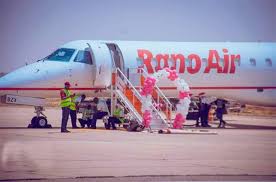
The recent decision by Rano Air to suspend select flight routes is not merely a strategic pivot by a single carrier; it is a loud, distressing alarm for an industry on the brink, writes WOLE SHADARE
Rano Air’s decision to scale back its operations is the latest domino to fall in a crisis fueled by an astronomical spike in Jet A1 fuel prices, prompting industry experts to sound the alarm about the future of domestic travel.

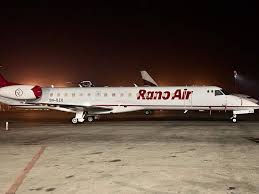
On May 8, 2026, Rano Air—a relatively new but vital player in the domestic market—announced a “difficult but necessary” decision to temporarily suspend several flight routes. The reason was singular and devastating: the cost of aviation fuel (Jet A1) has surged by over 300%.
For a carrier like Rano Air, operating a fleet of Embraer 145s, the economics are brutal. When Jet A1 was ₦900 per litre, regional routes were a gamble; at ₦3,000 to ₦3,500 per litre, they are a financial suicide mission. Fuel now accounts for over 50-70% of total operating costs for domestic carriers—double the global average.
The retreat we are witnessing is a strategic amputation. By cutting secondary routes, Rano is trying to save the heart of its operation.
While the specific routes were not immediately listed, the ripple effect was felt instantly across Nigerian airports, with passengers facing the familiar, frustrating cycle of refunds, rescheduling, and rerouting.
The Rano Air contraction is exactly what stakeholders feared. Speaking on the current state of the industry, an airline owner who spoke to Aviation Metric on condition of anonymity described the situation as a full-blown crisis that could see more carriers grounded before the year ends.
“It is a crisis. The price of Jet A1 went up from ₦900 per litre in February to nearly ₦3,300 by mid-April,” he noted. “It is not sustainable for the aviation industry. We have seen one airline stop operations already; two more are likely to go out of business before the end of the year.”
His grim outlook is shared by the National Association of Aircraft Pilots and Engineers (NAAPE).
The association warned on Sunday that the liquidity squeeze is so severe that it may soon bleed into safety concerns, as airlines are forced to look for cost-cutting measures in non-fuel areas such as maintenance and crew welfare.
The Anatomy of the Fuel Crisis
The statistics behind the struggle are staggering. In just three months, the price of Jet A1 has skyrocketed, fundamentally altering the cost structure of flying in Nigeria.
|
Month (2026) |
Avg. Jet A1 Price (Per Litre) |
|
February |
₦900 |
|
March |
₦2,100 |
|
April/May |
₦3,300+ |
Beyond the boardrooms of airlines like Ibom Air, United Nigeria and Air Peace, all of which have reported similar operational hiccups, the crisis is hitting the average Nigerian traveller hard.
Ticket prices on local routes have surged, making what was once a routine business trip a luxury expense.
For many Nigerians, air travel is no longer a choice but a necessity due to the security challenges on major highways. With fewer flights and higher costs, the “connectivity” of the Nigerian economy is beginning to fray.
A Plea for Intervention
Aviation Minister Festus Keyamo has urged airlines to remain resilient, acknowledging the enormous pressure caused by the fuel hike. There have been talks of including aviation fuel under the Federal Government’s “naira-for-crude” initiative to stabilise prices, but for many operators, these solutions are not moving fast enough.
Despite the Dangote Refinery supplying aviation fuel locally, prices remain tied to international benchmarks and the US Dollar. As the Naira struggles, domestic airlines—who earn in Naira but pay for parts, insurance, and leases in Dollars—are caught in a perpetual currency trap.
The Contagion Risk: Who is Most Vulnerable?
Virtually all airlines are vulnerable and have been shaken to their very foundations following the sudden jump in aviation prices. Relatively bigger carriers like Air Peace, Ibom Air, and United Nigeria Airlines through their umbrella body, Airline Operators of Nigeria (AON) have sounded the alarm over the existential threat the problem pose to their operation.
AON have already issued their ultimatum, and Minister Festus Keyamo’s recent 30% tax relief, while welcomed, is a bucket of water on a forest fire.
The real bottleneck remains the exploitative pricing from marketers and the slow integration of local refining capacity into the aviation supply chain.
In fact, both the President and Vice President of AON, Alhaji Abdulmunaf Sarina and Mr Allen Onyema, have repeatedly called for quick intervention before it is too late for them.
Airlines like United Nigeria Airlines and Overland Airways are under immense pressure. Because they often serve secondary and tertiary routes with lower passenger densities, they cannot easily absorb the triple-digit increase in fuel costs.
Aero Contractors and Arik Air: Both have struggled with fleet availability and liquidity. In a high-cost environment, carriers with smaller active fleets face operational strangulation, in which a single technical issue, combined with high fuel costs, can lead to indefinite grounding.
Air Peace: While they have the largest market share, their massive overhead and aggressive international expansion (like the London and New York routes) make them sensitive to domestic losses. If the domestic cash cow stops yielding profits due to fuel costs, even the big players may have to slash local frequencies further.
The industry is currently caught in a perfect storm, suggesting Rano Air won’t be the last to blink.
With aviation fuel now accounting for over 70% of operating costs, the $ 1,000+ per hour burn rate on older Embraer or Boeing airframes is becoming mathematically impossible to offset at current ticket prices.
There is significant industry chatter that for many domestic routes to remain viable, one-way tickets would need to exceed ₦350,000–₦500,000. At these prices, passenger volume collapses, creating a death spiral for the airline.
The next 60 days are critical. There are indications that AON may push for a temporary fuel surcharge or government intervention.
Instead of full suspensions, they may look for code-sharing or consolidating three daily flights into one heavily delayed mega-flight to save on fuel.
Rano Air’s move isn’t just an isolated business decision; it’s a canary in the coal mine for the 2026 Nigerian Aviation Crisis.
Unless there is a significant intervention in the fuel supply chain, such as direct lifting from Dangote Refinery at subsidised or stable rates, more tailfins will likely be parked on the tarmac soon.
Last Line
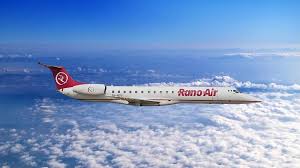
As Rano Air grounds its planes on less profitable routes and industry experts monitor the industry’s vital signs, the message to the government is clear: without immediate, systemic intervention in the fuel supply chain, the domestic aviation industry may soon find itself in a permanent descent.
Google+